
When limited space, demanding throughput requirements, difficult-to-store or handle goods, or complex operating environments make automation more challenging, that is where we are at our strongest. We help you create more capacity, increase throughput and improve efficiency by designing solutions around the real demands of your operation. Your challenge may be creating significantly more storage capacity within an existing building. Increasing throughput without expanding the operation. Automating the storage and handling of pallets, IBCs, drums, casks or other difficult loads. Operating in cold, hazardous, secure or tightly controlled environments. Or introducing new automation without disrupting your existing operation. Every project is different. That is why we start by understanding your operation and analysing your actual data. We do not design from averages. We design from what actually happens. We look beyond headline capacity and throughput requirements to understand what is really happening across your warehouse. How goods and inventory move through the operation. Where the peaks, patterns and constraints are. And what the business needs to achieve. We use that insight to shape the design, test the assumptions and engineer the right solution around the real demands of your operation. Depending on the challenge, that could mean redesigning the warehouse layout, increasing storage density, removing operational bottlenecks, introducing new storage systems, automating part of the process, integrating multiple technologies or developing a specialist solution where a standard approach will not work. We do not assume automation is always the answer. The objective is to understand what will create the greatest value for your operation, then engineer and deliver the right solution.


We work with you to understand your business, its challenges and your objectives

We analyse your data before presenting our proposed designs and layouts

We look at every potential solution, including manual, dynamic and automated solutions

We consider the impact on all costs and efficiencies to show the best ROI on your project

Continually developing innovative and integrated solutions to transform performance
Our Project Team will work closely with you to understand your operations, your challenges and the opportunities before designing the optimum solution with the best ROI

Capacity
Floor Space
Stock Movement
Utilisation
Future Plans
CAD and 3D Drawings
Configuration
Simulations
Building Warrant
Impact on Capacity
Impact on Productivity
Impact on Resources
Integration with WMS
ROI Calculated
CDM
Phasing and Timing
Minimise Disruption
Software Integration
Dedicated Project Manager
Inhouse Installation Teams
Commissioning Engineers
Zero Defect Guarantee
Our accreditations testify to our commitment to quality and safety as well as providing even further assurances to our growing client base. We ensure that all our projects are safe to build, safe to use, safe to maintain and deliver excellent value for money. We are very proud to hold ISO9001 status for the design and project management of storage solutions. ISO14001 accredited for Environmental Management practices, and ISO45001 accredited for Occupational Health & Safety Management. We were also one of the first companies in the UK to be awarded the prestigious SEMA Approved Members - Advanced status. As one of the UK's leading integrators of Automated Storage Solutions, we are also very proud to have been awarded Cyber Essentials Plus to demonstrate our commitment to IT security.

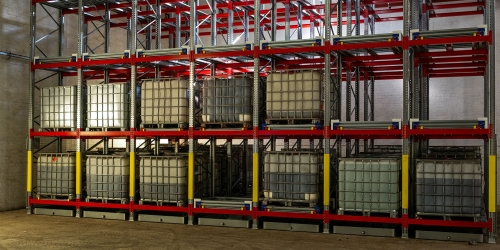
Our guide to IBC Storage covers everything you need to know: the challenges of conventional IBC storage, the racking and automated solutions available, bunding and compliance requirements, and how to choose the right approach for your facility.
Read more
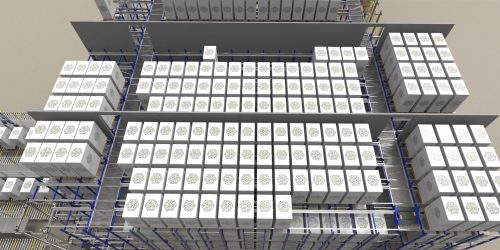
Many UK companies, particularly SMEs, are assuming that the costs of automated warehouse storage are too high to justify the investment. But is that really the case?
Read more
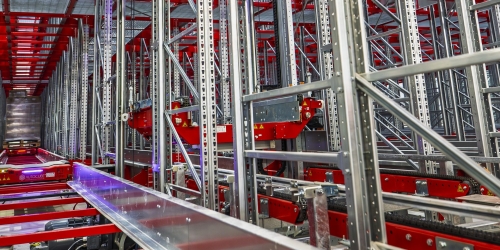
Our Max the Cube® approach looks at space utilisation slightly differently and focuses on cubic volumes rather than pallet positions used.
Read more


© 2026 Thistle Systems
© 2026 Thistle Systems

