


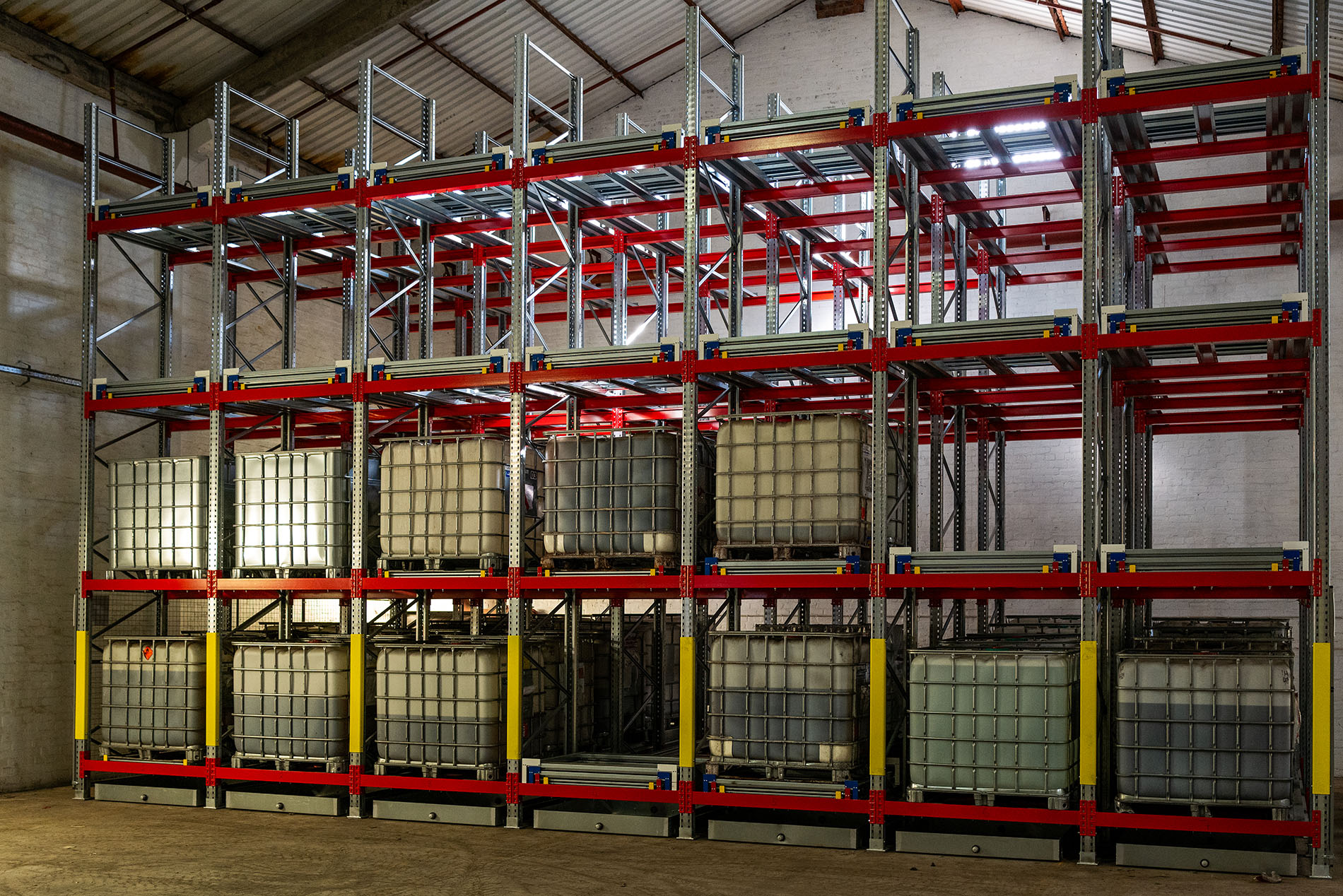
When warehouse capacity comes under pressure, the obvious conclusion is often that more space is needed.
But in chemical warehousing, a significant amount of usable cube can be consumed simply by the way inventory has to be accessed, segregated and handled.
Capacity disappears into:
The result is not simply fewer pallet locations.
It can mean more movements, more congestion, more interaction with hazardous loads and less control over where stock is located.
Before extending the building, renting additional warehouse space or installing more of the same storage, it is worth asking a different question:
A general warehouse can often be designed around pallet numbers, throughput and access frequency.
Chemical storage requires another layer of thinking.
The storage strategy may need to consider:
Which products can be stored together — and which cannot?
Not every chemical load behaves like a standard pallet. Container dimensions, weight distribution, stability, containment and handling requirements all affect the design.
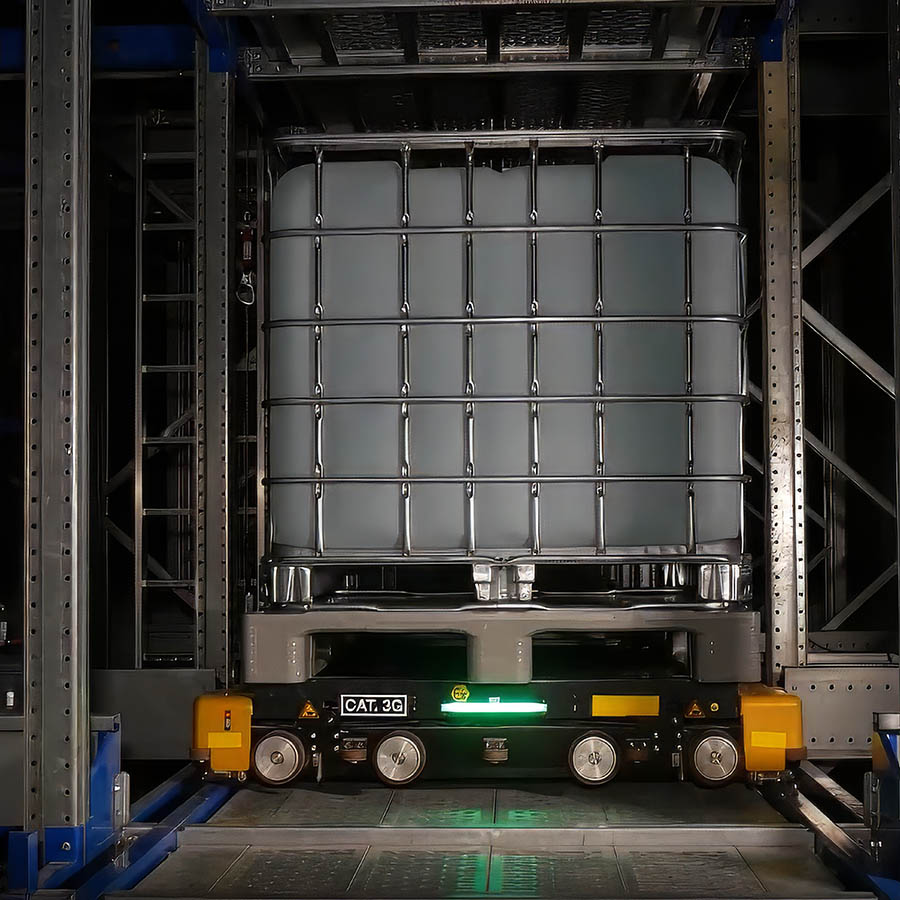
Where potentially explosive atmospheres exist, the storage and automation strategy must be developed around the site’s hazardous-area requirements from the outset.
Spill management, bunding, inspection and damaged-load recovery need to be part of the storage concept — not added afterwards.
The operation may need to manage batch, FIFO, FEFO, customer, product and segregation rules simultaneously.
Higher theoretical density has little value if it compromises the safe operation of the warehouse.
Every unnecessary movement creates another interaction between a person, a vehicle and a chemical load.
That is why we do not design chemical warehouses from pallet numbers alone.
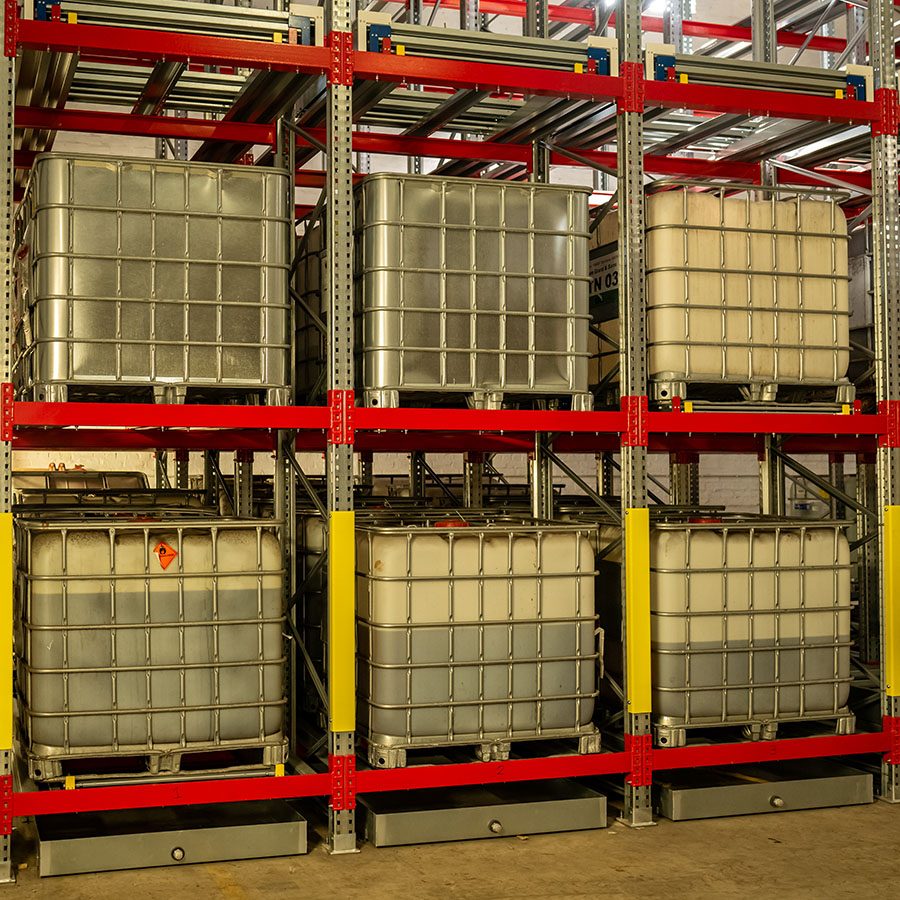

As regulatory pressures increase and operations become more complex, warehouse leaders are beginning to explore automated storage solutions for IBCs, including solutions designed for ATEX environments.<br /> <br /> Automation is not simply about efficiency. In chemical and hazardous materials storage, it can fu
Read more
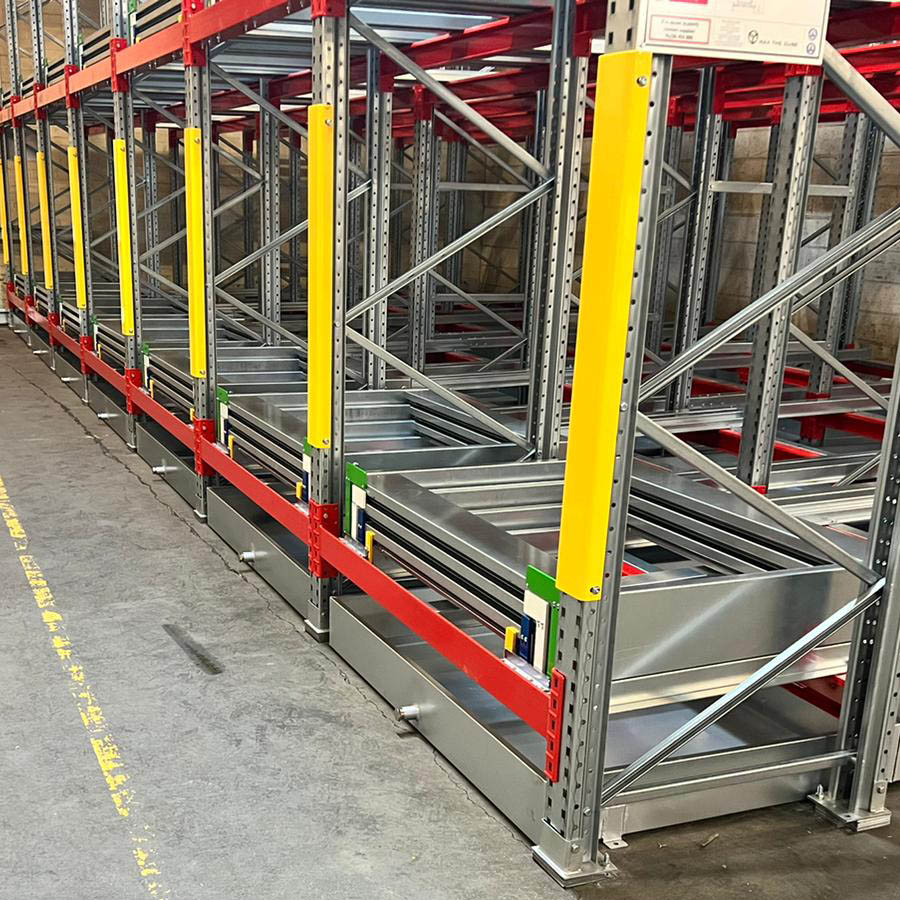
Intermediate bulk containers (IBCs) are one of the most efficient ways to store and transport large volumes of liquid. But the way most businesses store their IBCs is costing them far more than they realise covering floor space, safety risk and regulatory exposure.<br /> <br /> This guide covers everything you
Read more
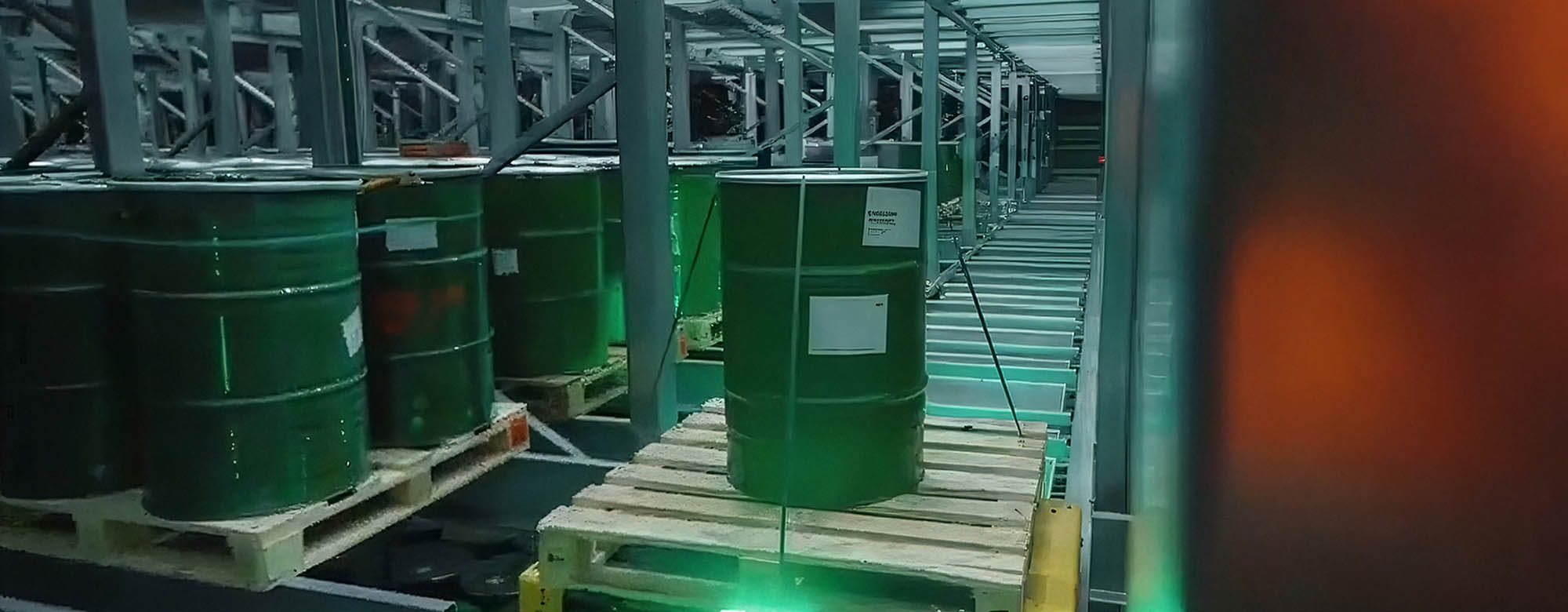
Drum storage is one of the most underestimated risks in hazardous warehousing – and one of the most overlooked opportunities for improvement.<br /> <br /> In this blog we explain the real cost of Traditional Drum Storage and the options available
Read more
© 2026 Thistle Systems
© 2026 Thistle Systems

