
Warehouse automation is a major decision. The technology matters, but so do the questions that come before it: What problem are you trying to solve? Which parts of the operation need to be considered? How will you know the investment is working once the system is in use?
For Mega Fortris, those questions were central to planning its new UK manufacturing facility. The business wanted to build resilience into its supply chain and hold stock locally, but it also needed a storage solution that made the operation commercially viable.
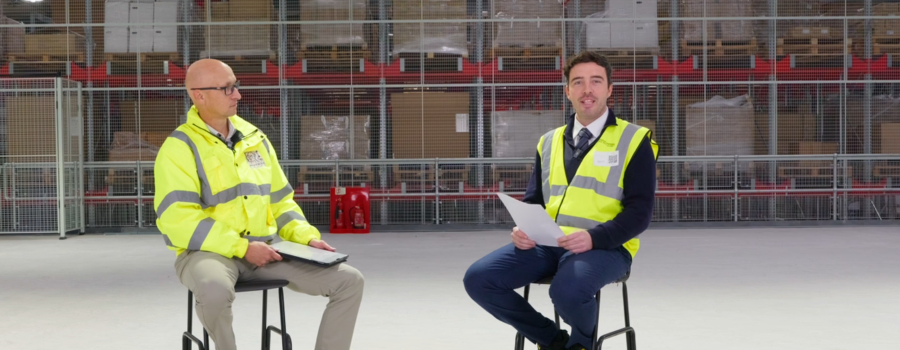
In the interview below, Group Chief Operating Officer Jason Francis shares what Mega Fortris considered, what it learned through the project and what he would advise other businesses to think about before committing to automation.
Start with the business objective
Mega Fortris did not begin with a decision to automate. The team worked backwards from what the new facility needed to achieve, including the stock it would hold and the service it wanted to provide to customers.
Jason explains that, when the team modelled the facility using conventional storage, the costs made the business case difficult to justify. That led them to assess higher-density storage and automation as ways to make the operation feasible.
The lesson is to define the operational and commercial objectives before deciding which technology to use. Automation may be the right answer, but it should earn its place in the business case.
Give the scope the time it needs
One of Jason’s clearest recommendations is to invest time in understanding the operation before committing to a solution. He says businesses should define their objectives carefully and involve the people and processes connected to the area being automated.
That means looking beyond the system itself. What feeds work into it? What happens after a pallet leaves it? Which teams will rely on the process? What space will be needed for goods in, despatch and staging?
Jason reflects that an extra couple of months spent on scoping could prevent significant problems later. It is a valuable reminder that the quality of the brief can shape the quality of the project.
Choose a partner who helps you think
Mega Fortris considered nine proposals. Jason says the technologies were similar, but the people and the quality of engagement helped distinguish Thistle.
He describes the team as challenging assumptions and helping Mega Fortris understand what it actually needed from the system, well before contract. The company felt it was already working with partners during the tender process.
That matters because selecting an automation system is not just a comparison of specifications. The project also depends on how well the supplier understands the operation, explores the brief and helps the customer make informed decisions.
Plan for cost and site considerations
Cost was a significant concern for Mega Fortris because the automation system was one part of a wider facility investment. Jason says the project finished with less than 1% cost creep. That is a specific result from this project, rather than a general promise, but it shows why clear scope and cost control mattered to the customer.
The project also surfaced a concern with the floor slab before the build began. Jason describes this as one of the most difficult points in the process, because of the potential effect on cost and timing.
Looking back, he would also have given more consideration to the space outside the system, particularly the staging areas and processes that feed into and out of it. It is a practical reminder that automation must be planned as part of the wider operation and site.
Bring the team with you
The transition from a paper-based, manual operation to a more automated process brought some initial reservations. Some team members felt they had more visibility when they could physically walk to a rack and see the stock.
Jason says that changed as people began using the system and experienced the visibility it provided. The warehouse, administration and order processing teams adapted quickly and began to see the benefits in their day-to-day work.
This is an important part of project planning. The people who will use the system need to be involved, prepared and supported through the change. A solution has to work for the operation in practice, not only on a plan or in a business case.
Look beyond installation
For Mega Fortris, the project’s development continued after commissioning. Jason describes new modules added after installation, particularly around order and stock fulfilment, as significant improvements to the way the team works.
He also says Thistle has proactively identified opportunities and asked whether Mega Fortris had considered doing things differently. For him, this showed that the partnership was focused on helping the business get more from the system over time.
That perspective shapes how a project’s success should be assessed. ROI and operational measures such as OEE matter, but Jason also points to longevity, scalability and how effectively the team uses the system.
Is automation right for every business?
Jason’s answer is that company size alone should not decide it. A smaller business may benefit from automation if it solves a real operational problem and makes commercial sense. A larger business may find that automation is not the right model for its needs.
The starting point is the same in either case: define the objective, understand the operation, build the scope and assess the business case.
For Mega Fortris, automation helped make its UK facility viable. Its experience shows that the decision is about more than choosing equipment. It involves understanding the wider operation, planning carefully, engaging the people affected and working with a partner prepared to help shape the solution.
If you’re defining a warehouse project, the time to involve potential partners is while the scope is still open – contact our Automated Warehouse team today to discuss your project.
Watch the full interview with Jason Francis above to hear more about Mega Fortris’s experience and advice for businesses considering automation.


