Cold store space is too expensive to waste.
When pallet capacity is tight, forklift routes are busy, dispatch windows are under pressure and energy costs keep rising, the answer is not always a bigger cold store.
Sometimes the bigger opportunity is to make the existing cold store work harder.
At Thistle Systems, we help businesses create automated cold storage solutions that are designed around the real movement of goods through the operation. We look at how pallets are received, stored, retrieved, staged and dispatched, then design a solution around the capacity, throughput and control the business actually needs.
Our AutoCube® automated storage and retrieval system helps cold store operators increase pallet density, reduce manual handling and create a more controlled way to store and retrieve goods in chilled and frozen environments.
Supported by our MAxIQ® warehouse orchestration software, AutoCube® gives cold store operators a smarter way to manage high-density storage, improve visibility and keep pallets moving through the operation.
If your cold store is running out of space, becoming harder to manage, or limiting the performance of the wider operation, Thistle can help you understand what is possible.
Create more capacity. Improve pallet flow. Reduce manual handling. Take greater control of your cold store.
When Your Cold Store Starts Working Against You
Cold stores are under constant pressure.
Volumes increase. SKU counts grow. Customer requirements change. Production needs more buffer space. Dispatch windows become tighter. Labour becomes harder to manage. Forklift routes get busier. Before long, a cold store that once worked well starts creating daily friction.
You can usually feel it before the numbers confirm it.
Pallets are harder to access. Operators spend too much time travelling through the cold store. Doors are opening more often than they should. Staging areas become congested. Picking and retrieval slow down at exactly the wrong time of day. The team works harder, but the operation does not feel any easier to control.
At that point, the issue is not always a simple lack of cold store space.
It is often a sign that the cold store is no longer designed around the way your operation actually moves.
Capacity Matters, But Flow Is What Makes It Work
Most cold store automation conversations start with one obvious question:
“How many pallets can we store?”
That matters. Of course it does.
But pallet capacity on its own does not tell you whether the cold store will actually perform.
A layout can look efficient on paper and still create problems in the real operation. It may give you more pallet positions, but still leave you with slow retrieval, poor access to fast-moving SKUs, too much forklift travel, congested staging, or bottlenecks around production and dispatch.
That is why automated cold storage has to be designed around flow, not just capacity.
The right questions are more operational:
- Where does the pressure really build during the day?
- Which products need to move quickly?
- Which pallets sit for longer?
- How many pallets need to be retrieved during peak dispatch periods?
- How often are forklifts entering the cold store?
- Where are operators losing time?
- How often are doors opening?
- Are you storing for production, dispatch, stockholding, or all three?
- What happens when demand spikes?
- Could the same cold store footprint work harder with a different design?
These are the questions that determine whether an automated cold store will simply hold more pallets, or genuinely improve the operation.
A high-density system that cannot retrieve pallets quickly enough will only move the bottleneck somewhere else.
A fast system that ignores SKU profile and movement patterns can create unnecessary complexity.
A layout that maximises storage but disrupts inbound, production or dispatch flow will not deliver the right return.
The best automated cold storage solutions are designed around the balance between capacity, throughput, access and control.
That is where the real value is created.
What Automated Cold Storage Should Really Solve
Automation should not be added to a cold store just because the technology is available.
It should solve a real operational problem.
For some businesses, the main issue is capacity. The cold store is full, external storage is being used, or growth is being limited by the amount of pallet space available.
For others, the issue is flow. Pallets are not moving quickly enough between production, storage and dispatch. Operators are spending too much time searching, travelling, waiting or working around constraints.
In some operations, the issue is labour. Manual handling inside chilled or frozen environments is becoming harder to manage. Recruitment is difficult. Productivity is inconsistent. Forklift dependency creates risk and cost.
In other cases, the issue is control. Stock visibility, pallet access, rotation, traceability and retrieval priority are becoming harder to manage as volumes increase.
A well-designed automated cold storage system can help address several of these challenges at the same time.
It can help you:
- Increase storage capacity within the same cold store footprint
- Reduce space lost to forklift aisles
- Improve pallet availability and retrieval
- Reduce manual activity inside chilled or frozen areas
- Improve safety by reducing forklift movement
- Improve stock visibility and control
- Reduce congestion around storage and dispatch
- Support more predictable operational flow
- Reduce reliance on external cold storage
- Delay or avoid the need for physical expansion
The strongest projects are not simply about installing automation.
They are about creating a cold store that works harder, moves better and gives the business more control.
The Hidden Cost Of Forklift-Based Cold Storage
Forklifts are often essential in a conventional cold store, but they also shape the entire operation.
They need aisles. They need turning space. They need operators. They create movement. They create risk. They travel in and out of temperature-controlled areas. They can damage racking, pallets, doors and infrastructure. They can also become a constraint when volume, SKU complexity or dispatch pressure increases.
In cold storage, every metre given to forklift access is refrigerated space that is not being used for storage.
That matters because cold store space is not passive. It has to be built, insulated, chilled, maintained and controlled. If a significant percentage of the footprint is tied up in aisles and access routes, the business is still paying to keep that space at temperature, even though it is not generating additional pallet capacity.
The result is a weaker energy position per pallet stored.
A conventional layout may hold the required number of pallets, but it may also force the business to chill more cubic space than necessary for each pallet position. As energy costs rise, that becomes harder to ignore.
This is where high-density automation can change the economics of cold storage.
By reducing the space required for forklift aisles and manual access, an automated system can help increase the number of pallets stored within the same refrigerated footprint. In a new-build project, it may also reduce the size of the cold store required in the first place.
The benefit is not simply more storage.
It is better use of expensive chilled or frozen volume.
A forklift-based layout can carry hidden costs in several areas:
- Lost storage density
- Wider aisles and turning areas
- More refrigerated space used for movement rather than storage
- Higher energy cost per pallet stored
- More manual movement inside the cold store
- Greater exposure of operators to chilled or frozen conditions
- Increased heat gain from forklifts, people and door movements
- Higher risk of racking, pallet, door and infrastructure damage
- Congestion during busy periods
- Slower pallet retrieval
- More complex traffic management
That does not mean forklifts are always the wrong answer.
But it does mean the true cost of a forklift-based cold store is bigger than the truck, the driver and the maintenance contract.
It also includes the cost of designing the cold store around manual access, then paying to refrigerate that space every day.
Automation gives cold store operators the opportunity to rethink the layout around storage density, controlled movement and operational flow, rather than designing everything around forklift access.
Where AutoCube® Fits
AutoCube® is Thistle Systems’ automated storage and retrieval solution for high-density pallet storage.
In a cold storage environment, AutoCube® can help businesses make better use of the available footprint by reducing the need for traditional forklift aisles and creating a more compact, controlled storage system.
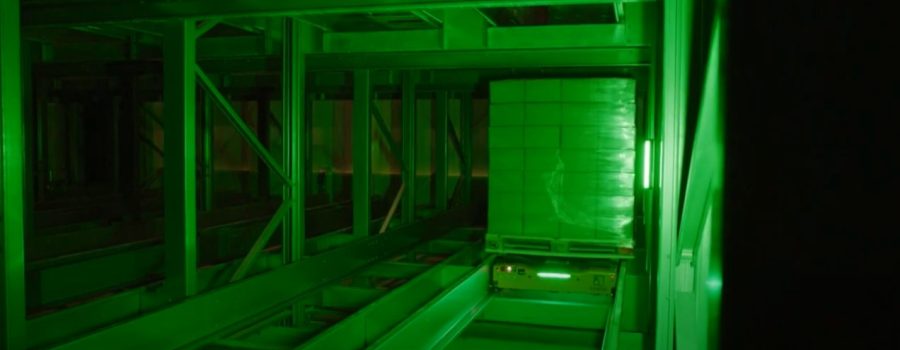
Instead of relying on operators to travel through the cold store to locate, access and retrieve pallets, AutoCube® automates the storage and retrieval process. Pallets can be stored in a high-density configuration and moved through the system in a controlled, predictable way.
For cold store managers, this can help address some of the biggest operational pressures:
- More pallet capacity within the same building
- Less reliance on forklifts operating inside the cold store
- Better control over where pallets are stored
- Faster and more predictable retrieval
- Reduced manual handling in chilled or frozen environments
- Improved visibility of pallet movements
- A more scalable platform for future growth
AutoCube® is particularly relevant where space is limited, expansion is expensive, throughput matters, or the cold store is becoming harder to manage manually.
It is not simply a storage system.
It is a way to redesign how pallets are stored, moved and controlled inside the cold store.
Why MAxIQ® Matters In Automated Cold Storage
The storage system is only part of the solution.
In a cold store, control matters just as much as capacity.
You need to know where each pallet is. Which pallet should move next. Which products need to be prioritised. Which stock is required for dispatch. Which movements are urgent. Which areas are under pressure. And how the cold store connects to production, picking, dispatch and the wider warehouse operation.
That is where MAxIQ® comes in.
MAxIQ® is Thistle Systems’ warehouse control and orchestration software. It helps connect automated movement with operational demand, giving the business better visibility and control across the automated cold storage process.
In practical terms, MAxIQ® can help support:
- Pallet tracking and location control
- Task prioritisation
- Storage and retrieval management
- Movement sequencing
- Integration with wider warehouse systems
- Improved operational visibility
- Better control of inbound, storage and outbound flow
- More consistent system performance
Automation without intelligent control can create another layer of complexity.
Automation with the right software gives the business a more controlled, visible and responsive cold store operation.
New Cold Store Or Existing Cold Store?
Automated cold storage can be considered in two very different situations.
The first is a new cold store project.
In a new facility, automation can be designed into the building from the start. The layout, storage system, doors, staging areas, dispatch flow, software and controls can all be planned together.
This can create a highly efficient operation, because the building and the automation are designed around the same performance requirements.
The second situation is an existing cold store that needs to work harder.
This is often where the commercial pressure is strongest. The building already exists. The cold store is under strain. Capacity is limited. External storage may be adding cost. Forklift movements are increasing. Labour is becoming harder to manage. Expansion may be expensive, disruptive or unrealistic.
In this situation, the challenge is not simply to install automation.
The challenge is to understand whether the existing space can be redesigned to create more capacity, better flow and improved control.
Both scenarios can benefit from automation, but the design approach is different.
A new-build project gives more freedom.
An existing cold store demands more careful integration.
In both cases, the starting point should be the same:
What does the operation need to achieve, and what is currently stopping it?
When Should A Cold Store Consider Automation?
Cold store automation is worth exploring when the current operation is becoming a constraint on growth, efficiency, safety or service.
You may be ready to consider automation if:
Your cold store is full, but demand is still growing
If the building cannot easily expand, automation may help you increase capacity within the existing footprint.
You are relying on external cold storage
External storage can solve a short-term problem, but it often adds cost, transport, handling and loss of control.
Forklift movement is becoming a bottleneck
If forklift travel, aisle space or traffic management are limiting performance, a high-density automated approach may offer a better solution.
Retrieval is slowing down dispatch
If pallets are difficult to access quickly during peak periods, the issue may be flow rather than total capacity.
Labour is becoming harder to manage
Working in chilled or frozen environments is demanding. Automation can reduce the amount of manual activity required inside the cold store.
Energy cost per pallet is under pressure
Automation cannot remove refrigeration costs, but better storage density can help make more efficient use of expensive chilled or frozen space.
Stock visibility and control are becoming harder
As volumes and SKU counts increase, manual systems can struggle to provide the level of visibility and control the operation needs.
You are planning a cold store expansion
Before committing to a larger building, it is worth asking whether the current footprint could be used more effectively.
How To Plan An Automated Cold Storage Project
The best cold storage automation projects start with real operational data.
Not assumptions. Not averages. Not a layout based only on pallet count.
A proper design process should look at how your cold store actually works.
That means understanding:
- Current pallet volumes
- SKU profile
- Inbound movement
- Outbound movement
- Peak activity periods
- Storage duration
- Product rotation
- Fast-moving and slow-moving stock
- Dispatch requirements
- Production links
- Forklift activity
- Door movements
- Current layout constraints
- Labour requirements
- Future growth expectations
This information helps determine what the automated system really needs to do.
The objective is not just to create a dense storage layout.
The objective is to design a cold storage system that can support the real movement patterns, peak requirements and operational pressures of the business.
At Thistle Systems, this is where our data-led approach is so important.
We start by understanding the operation, then shape the solution around what the business needs to achieve. That includes analysing flow, identifying constraints, testing assumptions and designing around real performance requirements.
In cold storage, this matters because the cost of getting the design wrong can be significant.
A system that stores enough pallets but cannot retrieve them quickly enough will not solve the problem.
A system that improves density but creates congestion elsewhere will not deliver the right return.
A system that is designed around theory rather than operational reality may fail to match the way the cold store actually works.
The right design starts with the right questions.
Not Every Cold Store Should Be Automated
Automation can be powerful, but it is not automatically the right answer for every cold store.
Sometimes the best first step is to improve the existing layout, change processes, review SKU placement, adjust handling methods, improve staging, or optimise how stock moves through the operation.
That is why an honest assessment matters.
The right question is not: “Can we automate this?”. The better question is: “What is the most effective way to improve capacity, flow and control?”.
For some operations, that may mean a fully automated storage and retrieval system.
For others, it may mean a phased approach.
It may mean combining automation with other warehouse improvements.
It may mean preparing the operation for automation later.
Thistle Systems helps businesses assess the right route based on their actual requirements, not just the technology available.
What Makes A Strong Automated Cold Storage Partner?
Automated cold storage is not just a racking decision.
It is an operational design decision.
The right partner should understand cold store constraints, warehouse flow, pallet movement, software control, safety, installation, integration and long-term performance.
A strong automation partner should be able to help you answer:
- What is really limiting our current cold store?
- How much additional capacity could we create?
- How would automation affect throughput?
- What happens during peak periods?
- How would pallets move through the system?
- How would this integrate with our existing operation?
- What are the operational risks?
- What level of software control is required?
- What is the commercial case?
- How would implementation be phased?
At Thistle Systems, we combine warehouse automation expertise, high-density storage technology, software control and practical project experience to help businesses design solutions that are engineered around the real demands of the operation.
Our role is not simply to supply equipment.
Our role is to help you create a better-performing cold store.
Frequently Asked Questions About Automated Cold Storage
What is automated cold storage?
Automated cold storage uses automated storage and retrieval technology to store, move and retrieve goods in chilled or frozen warehouse environments. It can reduce manual handling, improve storage density and provide greater control over pallet movement.
Is automated cold storage only suitable for large warehouses?
No. Automated cold storage can be suitable for both large and smaller operations where space, throughput, labour, safety, energy or control are becoming operational challenges. Suitability depends on the requirement, not simply the size of the warehouse.
Can automation increase cold store capacity?
Yes. In many cases, automated high-density storage can increase capacity by reducing the space required for forklift aisles and manual pallet access. The exact improvement depends on the building, pallet profile, storage requirements and system design.
Can automation reduce cold store energy costs?
Automation can help improve the use of refrigerated space by increasing storage density and reducing unnecessary manual movement inside cold areas. Energy performance depends on the full cold store design, but better use of chilled or frozen volume can support a stronger cost-per-pallet position.
Can AutoCube® be used in frozen warehouses?
AutoCube® can be designed for chilled and frozen storage applications where the operational requirements, temperature conditions and handling needs are properly assessed during the design stage.
What data is needed before designing an automated cold store?
Useful data includes pallet volumes, SKU count, inbound and outbound movement, order profiles, peak activity, storage duration, product rotation, dispatch requirements, current layout, forklift activity and future growth expectations.
What is the difference between automated racking and automated cold storage?
Automated racking usually refers to the storage equipment. Automated cold storage is broader. It includes storage, retrieval, software control, product flow, temperature considerations, integration and operational design.
Should we automate an existing cold store or build a new one?
That depends on your current capacity, building constraints, growth plans and operational challenges. In some cases, automation can help increase capacity within an existing cold store. In others, automation may be best designed into a new facility from the start.
How do we know if automation is right for our cold store?
The best starting point is an operational review. This should look at capacity, movement, throughput, labour, forklift activity, SKU profile, dispatch pressure and future growth requirements. From there, it becomes much easier to assess whether automation offers a strong commercial and operational case.
Talk To Thistle About Automated Cold Storage
If your cold store is running out of space, becoming harder to manage, or creating operational constraints, automation may offer a better way forward.
Thistle Systems can help you assess your current operation, understand your storage and flow requirements, and identify whether an automated cold storage solution could improve capacity, efficiency and control.
We do not design from averages.
We start by understanding what actually happens inside your operation.
From there, we help you explore the right mix of storage design, automation, software and operational planning to support your business.
Planning a cold store expansion, redesign or automation project?
Speak to Thistle Systems about automated cold storage and find out how AutoCube® could help you create more capacity, improve flow and build a more controlled cold storage operation.