Most COMAH warehouses aren’t restricted by regulation
They’re restricted by design.
There’s a common belief across COMAH regulated sites:
“We can’t increase capacity because of compliance.”
In reality, the limitation is rarely regulation itself.
It’s how the warehouse has been designed to interpret it.
The result is predictable. Space is under-utilised, layouts become inefficient, reliance on forklifts increases, and operational risk grow quietly.
This is where COMAH warehouse automation changes the equation.
For operation handling explosive atmospheres more broadly, this sites alongside our guide to ATEX warehouse automation which explores how automation supports safety and compliance in hazardous environments.
Understanding COMAH Constraints
COMAH regulations are designed to:
- Prevent major accidents
- Limit risk exposure
- Ensure safe storage of hazardous materials
This includes considerations such as:
- Separation distances
- Storage limits
- Risk zoning
- Emergency access
But crucially:
They do not dictate inefficient layouts
They do not require wasted space
The Problem with Traditional COMAH Warehouse Design
Designed Around Worst-Case Assumptions
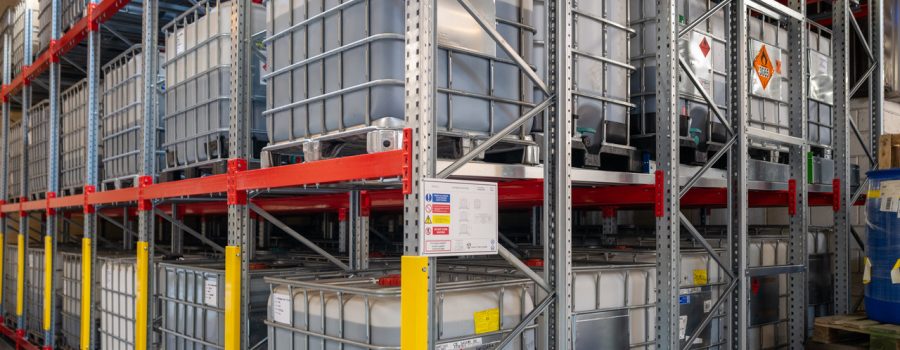
Many COMAH sites are designed to avoid risk by defaulting to worst-case assumptions. While well-intended, this often leads to excessive spacing, low storage density, and reduced operational efficiency.
Over time, these assumptions become fixed constraints, even when safer, more efficient options exist.
Over-Reliance on Forklifts
Forklifts remain central to most COMAH operations, largely because layouts leave no alternatives. In hazardous environments, this introduces a combination of safety risks, inefficiency and operational complexity.
Manual movement becomes the biggest uncontrolled variable in the system.
Poor Visibility and Control
Manual and semi-manual systems often struggle to provide real-time tracking, accurate inventory visibility, and audit-ready data. As a result, teams are forced into reactive management rather than proactive control.
The Opportunity: Smarter Design Within the Same Rules
Modern automation allows COMAH operators to rethink layout and flow without compromising compliance. Storage density can be increased safely, manual handling reduced, and traceability improved, all within the same regulatory framework.
It’s about designing intelligently within them.
How Automation Transforms COMAH Warehouses
Automation changes risk management from a procedural challenge into an engineered one.
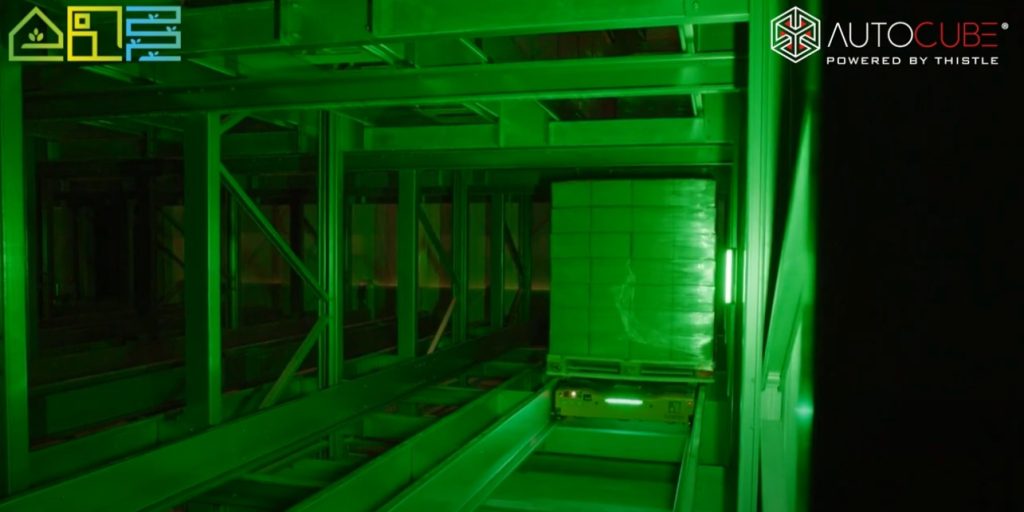
High-density systems make better use of vertical and cubic space while maintaining space separation and controlled access. Forklifts are removed from high-risk zones, reducing ignition risk, human error, and congestion, while material movement becomes predictable and system-driven, with every pallet, IBC, or drum tracked in real time.
Control replaces compromise.
Where the Biggest Gains Are Made
The impact of automation is greatest in COMAH warehouses where:
- Space is constrained
- Throughput demands are increasing
- Audit pressure is rising
- Risk reduction is a priority
AutoCube®-X for COMAH Environments
AutoCube®-X is designed specifically for hazardous and regulated environments. It enables high-density storage, reduces reliance on manual handling, and delivers controlled, system-driven operations with full visibility and traceability.
It is engineered for COMAH environments from the outset.
Rethinking What’s Possible
The biggest shift isn’t technology. It’s mindset.
Moving from asking:
“What are we allowed to do?”
To asking:
“What is actually possible when regulations are designed into the system?”
Discover Your True Capacity
If you’re operating a COMAH warehouse, there is a strong chance your space is being under-utilised.
A structured assessment can reveal where capacity is being lost, where risk can be reduced, and how automation could transform the operation without expanding the footprint.
Request Your COMAH Warehouse Assessment