
Most advice on slow-moving stock treats it as a slotting problem. Move the slow lines to the back and to the top, keep the fast movers in the golden zone, reslot when demand shifts. All sensible, and all working within the racking you already have.
But sometimes the racking itself is the problem. When slow and awkward SKUs sit in standard pallet racking, they impose two costs that no amount of reslotting can fix. The big one is space: slow movers waste an enormous amount of it. The second, close behind, is picking speed: they slow your whole operation down. The real answer isn’t where you place them. It’s getting them out of pallet racking altogether.
That’s what a picking tower does. It’s one of the most effective and least understood ways to reclaim wasted space in a warehouse, and it speeds up picking at the same time.
The Two Way Waste Of Slow Stock In Pallet Racking
Slow-moving stock in pallet racking wastes space on a scale most operators never quantify, and it does it in two directions at once.
The first is the one nobody measures: the dead air. A single slow-moving pallet on a standard beam level leaves the entire pallet height above it empty, because nothing else can go there. One SKU, occupying a position and sterilising all the space around and above it. Do that across every slow line in the building and you have a vast volume of dead air locked into the racking, paid for and doing nothing. It’s almost always the single biggest waste in the operation, and the hardest to see.
The second is more obvious once you look. The SKUs you pick once a week or once a month sit in prime, accessible ground-floor positions that your fastest lines are crying out for. Prime real estate, given over to stock that barely moves.
There’s a third problem specific to the kind of stock that moves slowly. Low-volume lines are often an awkward fit for standard adjustable pallet racking (APR) in the first place. You end up with small, crowded pick face locations holding oddments, which take multiple touches to replenish and eat labour every time they’re topped up. The racking was designed for full pallets of fast-moving product. Asked to hold the slow, mixed, low-quantity tail, it does the job badly.
The Forklift Tax On Picking
Space is the headline cost, but there’s a second one running close behind: what slow stock does to picking speed.
Picture how a slow line stored high on pallet racking actually gets picked. A picker needs a few units. Someone has to bring a forklift over, lift the pallet down from height, wait while the picker takes what they need, then lift the pallet back up again. For a single slow-moving item. Every pick of that line triggers a forklift movement.
Multiply that across a long tail of slow SKUs and it becomes a constant, low-level tax on your whole operation: forklifts tied up fetching oddments, pickers waiting on trucks, and motion waste everywhere. It’s rarely counted, because no single instance looks expensive. Added up across a year, it’s substantial.
The Fix: The Right Storage Solution, Built Upward
The principle is simple, and it’s well established in warehouse design: match the storage method to the product.
Look at it from a different way – having slow-moving SKUs in pallet racking is as wasteful as having fast-moving SKUs in shelving bins. It just a recipe for disaster.
So the fix for slow movers is to take them out of bulk pallet racking entirely and put them on shelving designed to suit the products themselves. Smaller items at sensible heights and sensible densities, in accessible pick faces, instead of one lonely pallet swallowing a full bay.
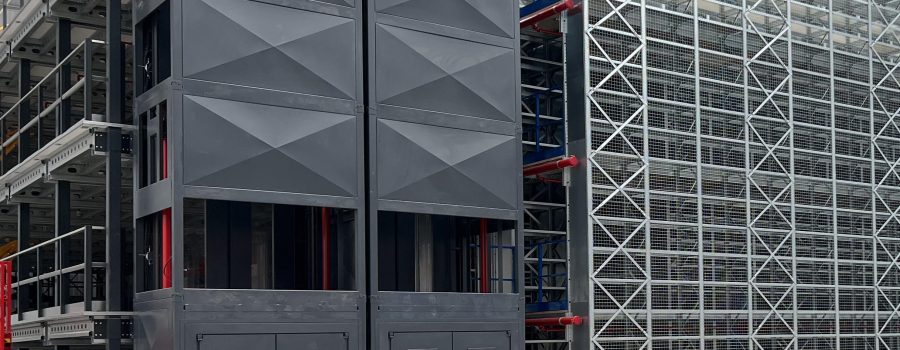
The step that turns this from a good idea into a transformational one is building that shelving upward. A multi-tier picking tower stacks the picking operation vertically, using the full height of the building instead of leaving it as dead air above the racking.
This is where the massive space gain comes from. All that wasted cube above the slow-moving pallets, the volume you were paying for and not using, gets converted into usable picking levels. Far more pick faces in the same floor area, the slow and medium tail consolidated into a dedicated, self-contained area, and the prime ground-floor positions they used to occupy handed back to the fast-moving stock that actually needs them. On a constrained site, reclaiming that height can be the difference between coping and needing a bigger building.
The gain on picking speed runs a close second, and it’s just as real. Accessible shelving means the forklift dance disappears: the picker walks up and picks, no truck required. Faster, safer, and it frees the forklifts for the work that genuinely needs them.
Picking Tower – Creating a Powerful Integrated System
A picking tower can deliver enormous benefits in its own right – however in busy picking environments, it can be enhanced even further when designed as a complete system, not a set of shelves stacked on top of each other.
Three elements can transform the performance and efficiency. The tower itself provides the capacity and the multi-tier pick faces. Marshalling mezzanines, attached to the tower, give dedicated staging floors that link the picking levels to the goods lift and move product away from the congested dock area. And pallet and goods lifts handle the vertical movement of stock between levels safely, replacing people carrying loads up and down, or worse, manhandling them on stairs.
Together they create a clean vertical flow: stock lifted safely to the right level, picked on accessible faces, staged on the marshalling floors, and fed down into a balanced outbound operation. No manual handling on stairs, no forklift fetching single lines from height, no congestion at the dock.
There’s a further benefit people often miss. Because a tower is a defined, enclosed structure, controlled access can be designed into it from the start, which matters when the slow-moving tail includes high-value or sensitive stock.
Case Study: JW Filshill
A recent project for JW Filshill, one of Scotland’s leading food and drink wholesalers, shows how this comes together in practice.
The starting point was a common one: previously, all stock sat on standard pallet racking, fast and slow lines treated the same way regardless of how they actually moved. The redesign matched each storage method to the stock profile, with four systems working in harmony:
- Shuttle racking for the fast-moving pallets, giving high-density bulk storage.
- Live (gravity) racking for the fast-moving picked cases, feeding pick faces from behind so replenishment never interrupts the picker.
- Conventional racking for the medium-moving SKUs, where direct access matters more than density.
- A four-tier picking tower, with attached marshalling mezzanines and goods lifts, for the slow-moving items.
The picking tower was the answer to Filshill’s slow, wide-ranging tail. Carrying a large variety of products in lower quantities to service a diverse customer base, they had exactly the problem described above: awkward-fit, low-quantity SKUs creating small, crowded pick faces that needed multiple touches to replenish.
The biggest win was space. Building the slow tail upward into a four-tier tower reclaimed the height that this stock had been wasting across the floor, and removed a significant number of products from bulk storage entirely, freeing that pallet racking for stock that earns its position. It also let them expand the pick face space available and bring the replenishment cycle under control.
The attached mezzanine floors improved the marshalling of both inbound and outbound goods, moving product away from the dock areas faster and giving a staging area to help balance outbound workflow. And on picking, by cutting the travel distance between picks and moving toward multi-order picking within the tower, Filshill forecast a 27% uplift in their packs-per-hour metric against their previous APR racking.
That 27% is Filshill’s own forecast rather than a measured result, but it reflects the scale of gain available when slow-moving stock is finally stored the way it should be, in a dedicated tower rather than scattered through pallet racking.
The Wider Principle
The picking tower is the focus here, but the real lesson of the Filshill project is broader: no single storage system is right for every SKU. The best outcomes come from matching each method to how the stock actually moves, and often that means several systems working together in the same building.
Fast pallets, fast case picks, medium movers and the slow tail each have a storage method that suits them. Put them all on the same racking and every one of them is compromised. Match the method to the movement and the whole operation gets faster, denser and safer at once.
At Thistle Systems, that’s where we start every project: with the SKU profile, the throughput and the movement data, before we design anything. Sometimes the answer is a picking tower. Often it’s a picking tower alongside three other systems, each doing the job it’s best at. Analyse the problem first, let the data determine the solution, and the result is an operation that works, and keeps working as it grows. That’s how we keep Clients for Life.
Frequently asked questions
What is a picking tower? A picking tower is a multi-tier pick module that stacks a warehouse’s picking operation vertically. Instead of storing stock in single-level pallet racking, it uses the full height of the building with several floors of accessible shelving, usually served by goods lifts and linked by marshalling mezzanines. It’s particularly effective for slow and medium-moving SKUs that waste space and slow picking when kept in standard pallet racking.
Why is slow-moving stock a problem in pallet racking? Slow-moving stock in pallet racking wastes space twice: it occupies prime accessible positions, and it leaves the full pallet height above each pallet empty, because a single-SKU beam level can’t be shared. Low-quantity lines are also an awkward fit for pallet racking, creating crowded pick faces that need multiple touches to replenish, and picking them from height often requires a forklift to bring the pallet down, slowing the whole operation.
How much space can a picking tower save? The main space gain comes from building the slow-moving tail upward instead of leaving it spread across single-level pallet racking. Every slow pallet on a beam wastes the full pallet height above it; a multi-tier tower converts that dead air into usable picking levels, consolidates the slow range into a compact dedicated area, and hands the vacated prime positions back to fast-moving stock. On a constrained site, reclaiming that height can remove the need for a larger building.
How does a picking tower improve picking speed? It puts slow and medium-moving items on accessible shelving instead of high pallet racking, so pickers can walk up and pick without waiting for a forklift to retrieve a pallet. It also shortens the travel distance between picks and enables multi-order picking within a dedicated area, cutting motion waste. In the JW Filshill project, these changes underpinned a forecast 27% uplift in packs per hour.
What’s the role of goods lifts and mezzanines in a picking tower? Goods and pallet lifts move stock safely between the tower’s levels, replacing manual handling on stairs. Attached marshalling mezzanines provide dedicated staging floors that link the picking levels to the lifts and move product away from congested dock areas, helping to balance inbound and outbound workflow. Together they turn the tower into an integrated system rather than a stack of shelves.
Should all my stock go in a picking tower? No. A picking tower suits slow and medium-moving items with a wide, low-quantity SKU range. Fast-moving pallets, fast case picks and other profiles are usually better served by other systems such as shuttle racking, live racking or conventional racking. The best warehouse designs match each storage method to how the stock moves, often combining several systems in one building.
Slow-moving stock taking up space and slowing your picking? Thistle Systems designs picking towers, goods lifts and integrated storage around how your stock actually moves. Get in touch for a conversation about your operation.


